Why Rare Disease Awareness Must Extend Beyond Healthcare
Dr Layan Allawi, Haematology Specialist Doctor, Clinical Fellow with NHS England and MfRD Ambassador, reflects on why rare disease awareness must extend beyond healthcare, and how new educational resources are helping schools better support children and young people living with sickle cell disease and thalassaemia.
I became an ambassador for Medics for Rare Disease in 2023, after meeting Lucy McKay, who opened my eyes to just how underserved the rare disease community was.
As clinicians, from the moment we enter medical school, we are taught to recognise and identify common patterns and conditions. But what happens when a patient’s presentation doesn’t fit the pattern? What if this isn’t what I think it is? What if it’s rare?
At the time, I was developing educational resources for people affected by sickle cell disease. Becoming an MfRD ambassador felt like a natural extension of this work, allowing me to share my learning and raise awareness – with the obligatory zebra socks, badges and coffee cups!
But over the last year, my understanding of rare disease awareness has expanded considerably.
Beyond healthcare
In my recent role with NHS England, within the Healthcare Inequalities team, I have been involved in developing national educational resources for sickle cell disease and thalassaemia. Our first step was to develop resources for schools and educators, taking me into unfamiliar territory.
I found myself working with an audience outside healthcare, with different responsibilities, pressures and levels of knowledge. Yet, there was an expectation that educators should recognise and respond to conditions that healthcare professionals themselves struggle to understand.
It made me realise that the challenges faced by people living with rare conditions do not stop at the hospital doors. I had previously only thought about these challenges through a healthcare lens: delayed diagnoses, gaps in research and difficulties accessing appropriate care. But what about the classroom, university and the workplace?
For a child living with sickle cell disease or thalassaemia, their condition may affect attendance, energy levels and participation. They may need adjustments that are not immediately obvious to others, leaving them to repeatedly explain their condition, advocate for themselves and feel misunderstood.
This is not necessarily a failure of compassion. Often, it reflects a lack of accessible information and practical guidance.
Knowledge is limited, but accessibility shouldn’t be
There are thousands of rare conditions, and it would be unrealistic to expect every clinician, teacher or employer to know them all. Simply adding more information to already crowded curricula and training programmes cannot be the whole answer.
Instead, we need to build systems that work even when specific knowledge is limited.
In healthcare, this means remaining curious when a presentation does not fit, questioning our assumptions, listening to patients and knowing when to seek further advice. Outside healthcare, it means making trustworthy information accessible, providing practical guidance and creating clear routes to support.
Teachers do not need to become clinical experts to support a student with a rare condition. But they do need to know where to find information, how to approach individual needs and who to contact when they need help.
Furthermore, people living with rare conditions should not have to carry the entire responsibility for educating everyone around them. Healthcare system should share this load by creating reputable and accessible supportive information.
National learning resources: A guide for schools and educators
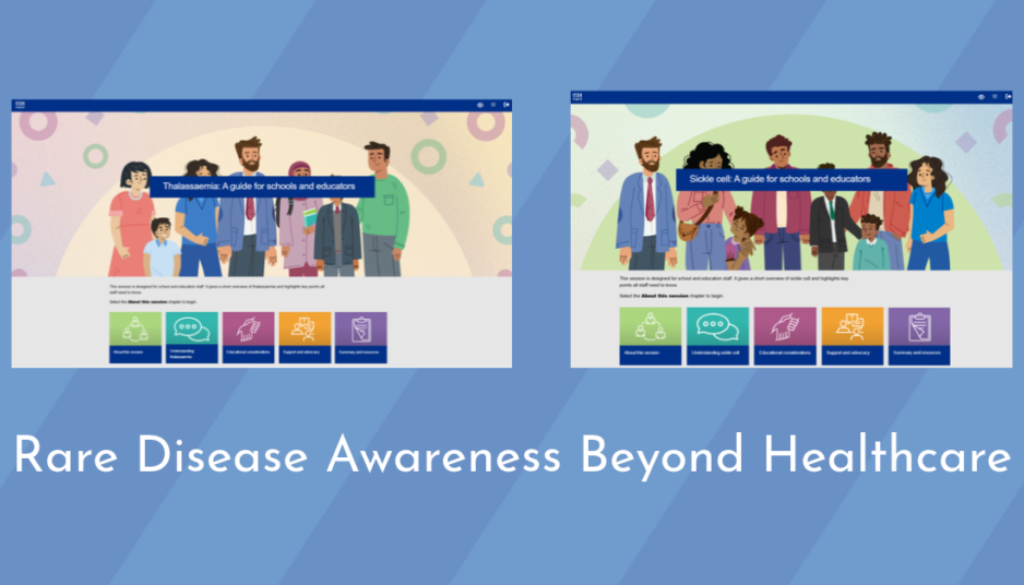
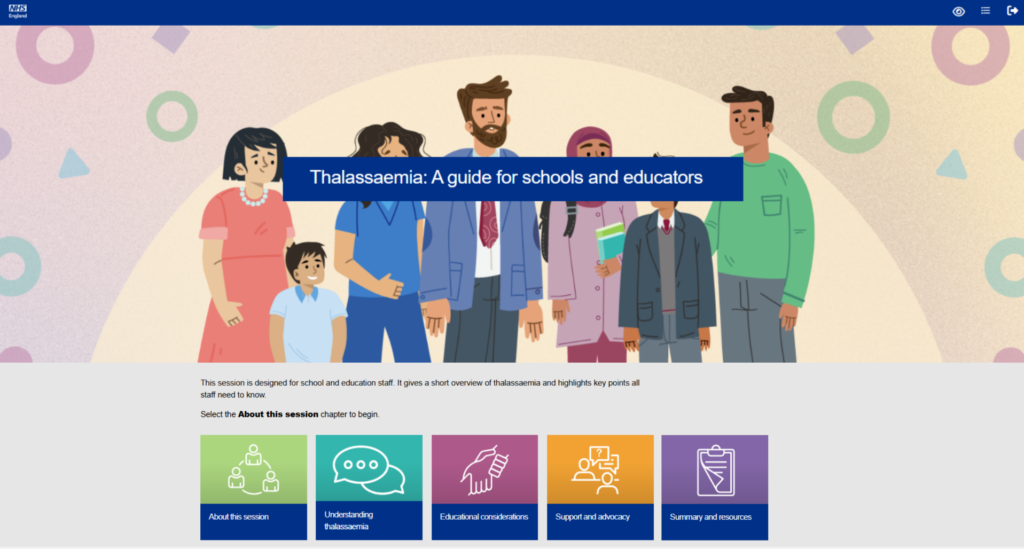
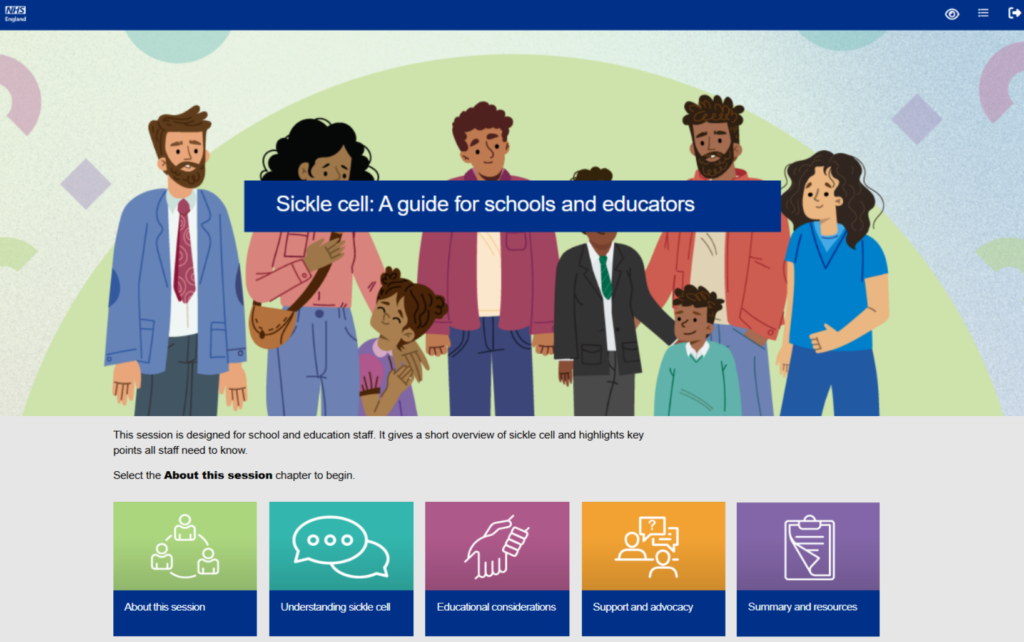
This thinking shaped the development of two national e-learning resources for teachers and educators: one for sickle cell and one for thalassaemia, published on the NHS Learning Hub.
The aim is not to turn teachers into clinical experts, but to help them understand these conditions, recognise their potential impact on education and feel more confident supporting affected students.
The resources draw on lived experience and practical strategies that have helped students of different ages engage with education. They also contain individualised care plan templates for different educational settings, designed to prompt meaningful conversations between students, families, schools and healthcare professionals, such as planning for examinations or school trips and agreeing what to do if a student becomes unwell. The aim is to anticipate needs rather than wait for difficulties to arise.
The resources also include a short explainer animation for visual learners and those with limited time, alongside signposting to national patient organisations and regional clinical teams for further advice.
Reflections and acknowledgments
I would like to thank the NHS England Healthcare Inequalities team for commissioning this work and the NHS Technology Enhanced Learning team for bringing the content to life as accessible e-learning resources.
My deepest gratitude goes to the sickle cell and thalassaemia working groups comprising students and adults with lived experience, parents and carers, healthcare professionals and educators, whose time and expertise were instrumental in shaping resources grounded in the realities and challenges people face in education.
This work has reinforced my belief that more needs to be done to build bridges between people living with rare conditions, healthcare professionals and the wider communities around them. We cannot expect everyone to know every condition, but we can make information easier to access and create environments where people feel understood and supported, so people living with rare conditions can reach their full potential.