What Health Care Professionals Are Asking us About Rare Disease – and Why it Matters!
There are over 6,000 rare diseases, and while it is not possible for healthcare professionals to know about every individual condition, collectively rare diseases cause similar patterns of healthcare challenges. People living with rare conditions consistently report similar experiences, including long diagnostic journeys and difficulties accessing appropriate care. By improving awareness of rare disease, healthcare professionals can recognise the signs and symptoms of possible rare disease earlier and provide informed holistic care to people living with rare disease throughout life.
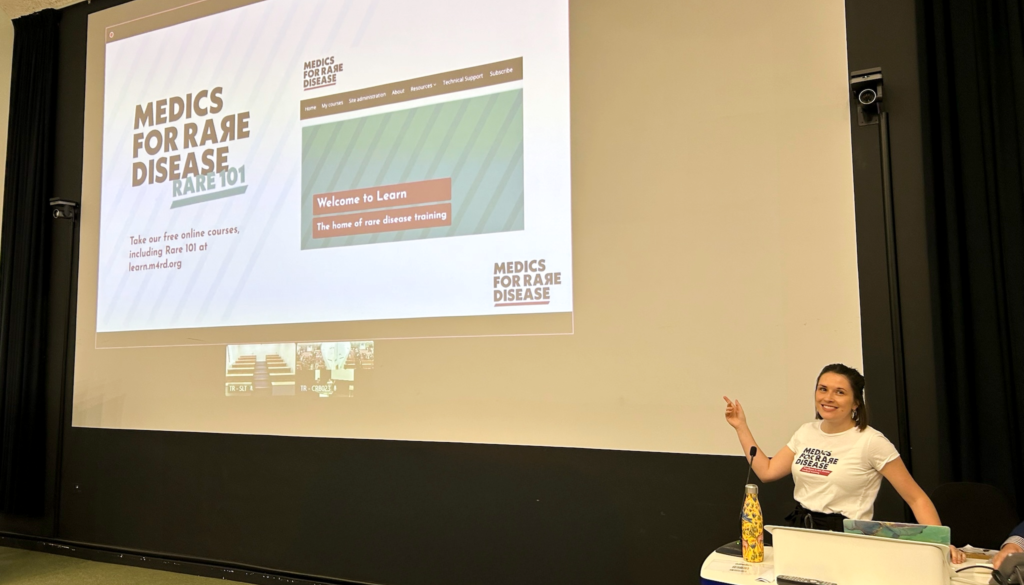
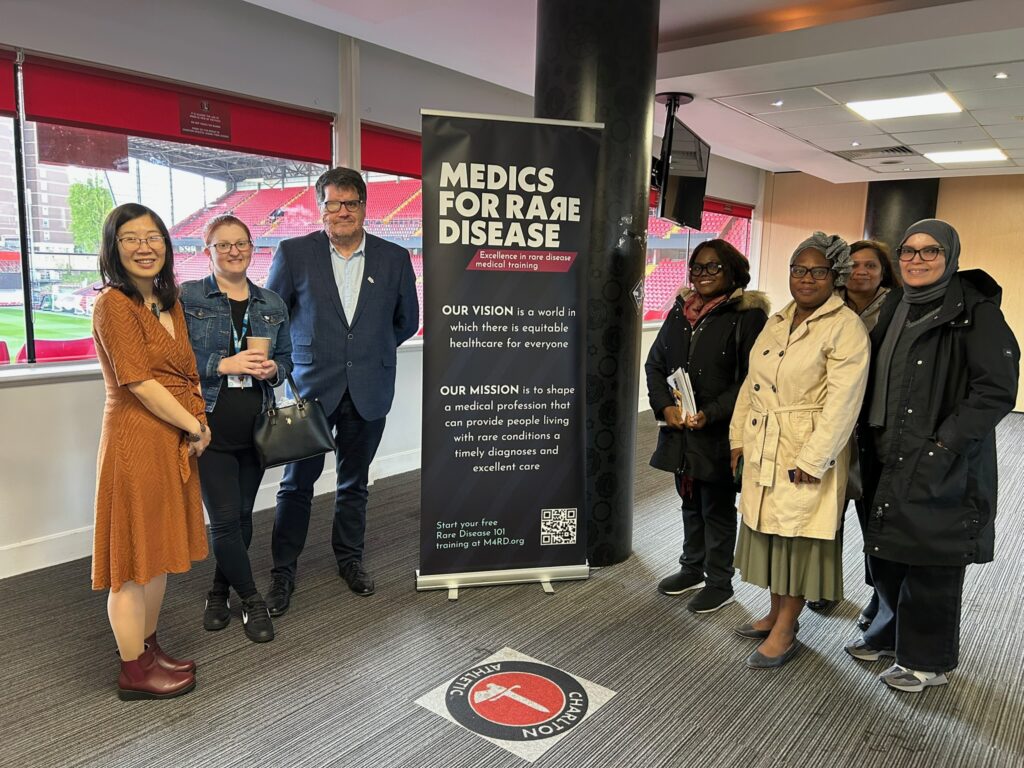
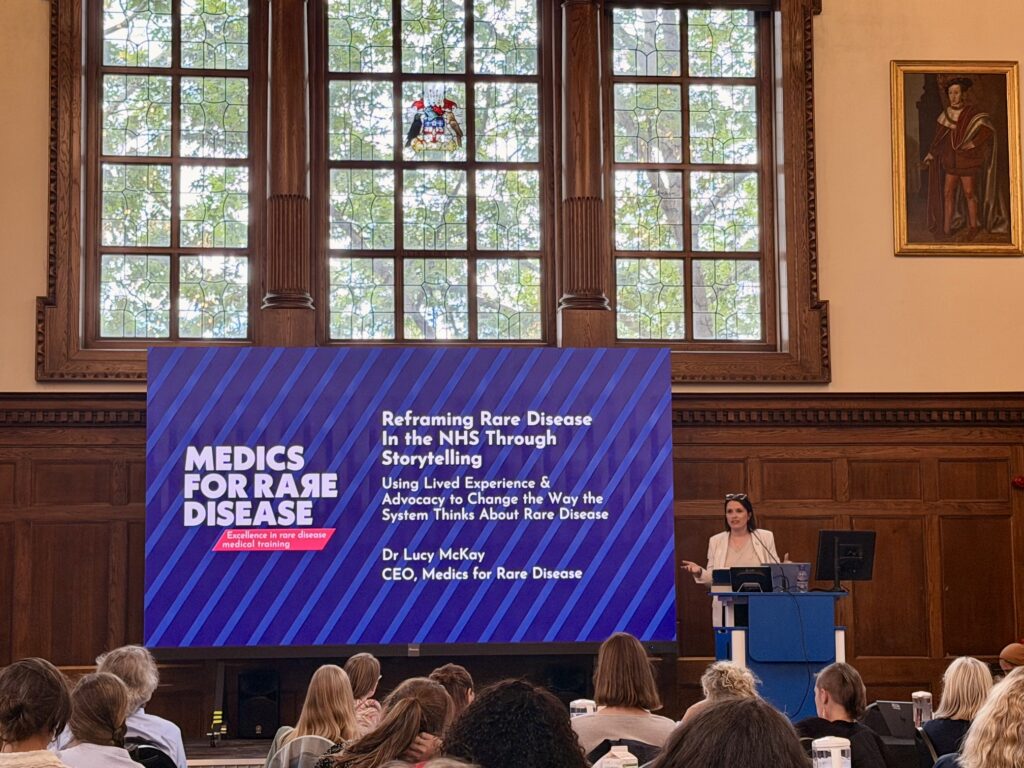
At Medics For Rare Disease, our mission is to shape a medical profession that can provide people living with rare conditions a timely diagnosis and excellent care. We deliver free rare disease education through our Rare Disease 101 e-learning course, which can be completed at your own pace. In addition we also provide in-person Rare Disease 101 training sessions. During these training events, healthcare professionals and students have the opportunity to ask questions about rare disease, diagnosis, and patient care, and to learn from real patient stories thanks to our valued lived experience contributors.
“The whole session was brilliant. Fantastic awareness raised and really touching personal story to make it all very real!” GP Trainee
In this blog, we’ve brought together some of the questions we are most frequently asked, to help build understanding and inspire the next generation of healthcare professionals to become Rare Aware.
What advice do you have for future clinicians when approaching genetic conditions?
You don’t need to be a geneticist or an expert in genetics in order to provide informed and compassionate care. There are many resources that can provide you the fundamental knowledge needed but otherwise, as in all medicine, take a patient-centered approach.
What’s really key is to not be judgemental or to fall into traps that mean you could unwittingly harm your patient with insensitive language or communication. For example:
- Not all genetic conditions are inherited from one generation to the next.
- Don’t make assumptions e.g. regarding consanguinity based on someone’s ethnicity.
- Don’t make moral judgements about people’s individual choices.
- Ensure your knowledge is up to date and if it’s not, admit it, do your research and get back to your patient.
Don’t miss opportunities to support your patient via your colleagues in Genetics and also through direction to patient advocacy groups like Unique.
Learn the basics about genetics via the Genomics Education Programme.
You can learn more about communicating about rare genetic and genetic diseases via our Mental Health and Rare Disease e-learning course here.
How should doctors talk to parents about their child’s future?
Be honest, but don’t deprive people of hope. Avoid sweeping statements like “your child will not live until adulthood” or “your child will never go to school” – genetic conditions show variation in presentation and prognosis (just like common conditions). The evidence base for individual conditions is often minimal and based on a few cases.
Talk about what you CAN do, and how they can be supported to live their best lives.
There is a really interesting story by Same But Different about a family who were told their unborn child was “incompatible with life” because of a rare genetic condition. The baby lived for a number of years. They felt that that earlier conversation had falsely destroyed any hope they had for their child and left them unprepared for the reality of what would come.
Please learn about Arlo’s story on our e-learning in the Mental Health and Rare Disease course.
What is the most important thing to keep in mind when caring for families with a rare disease diagnosis?
Signpost families to trusted patient organisations early. This will support your own practice and support the family.
When someone has a rare condition they are at great risk of being left isolated in healthcare and society unless their healthcare professionals consciously decide to be a part of a safety net for them. This is because healthcare and society are not set up to support rare conditions. Your support, and that of a patient organisation, can prevent that family from needing to navigate the journey alone.
Don’t forget there is more research and opportunities for treatment than ever before. So please advocate for your patient by asking specialist centres about potential research and clinical trials:
What do you think doctors can do better regarding diagnosis?
You will already be taught how to deliver diagnoses in other areas of medicine such as cancer. You must be prepared, make time for the delivery, communicate with compassion and know how you’re going to follow up.
Sometimes the difficulty with rare disease is that diagnosis can take time, which in itself generates uncertainty for families and professionals. Remember that if you don’t know the answer – that’s ok! Acknowledge uncertainty rather than trying to provide false certainty, and use gaps in your knowledge as an opportunity to learn. Being honest about what you don’t know builds trust with families and shows that you are committed to finding the right information rather than bluffing your way through.
Some quick tips:
- Get advice from the patient advocacy group during diagnostic work up and before delivering a diagnosis.
- Give materials from a patient advocacy group but also offer to contact them yourself (as not all people will be comfortable doing this even if they want to).
- When giving a diagnosis to parents about a child it may not be appropriate to have the child there. Think about what the family will be doing after – will they be facing their other children straight away? Do they need space and time to process before doing so? If so, you will need to tell them to make arrangements.
- Don’t try to deliver all the information in one go. Expect to revisit the conversation in the next few days or weeks.
Please watch this video about this family’s diagnosis
Will Jess’ Rule make a difference?
Candidly – in my opinion, no it won’t make a difference.
It is already the case that patients who are repeatedly presenting should be reviewed for potentially missed options for diagnosis and care. Jess didn’t have a rare condition – had she been older she would have probably been referred and treated. But she had a rare condition for her age….meaning she was dismissed. No rule is going to change that attitude.
As we are increasingly asked to work according to guidelines and proformas, people who don’t match those criteria will get missed unless we see them as only tools to support us. If you don’t listen to and look at the patient as an individual you will miss what is staring you right in the eye.
See this video from someone with a rare cancer about Jess’ Rule:
Have you seen newer generations of doctors being more open to learning about rare conditions?
YES! I have been educating about rare disease since I was in medical school. I graduated in 2014 and the increasing willingness and desire of future doctors to truly understand this patient population is inspirational for me. In ten years the change has been marked. As a member of a rare family, it is so heartening to know that families are surely going to face less stigma than we did in the future.
For more information and to start your Rare Aware journey visit and sign up for Rare Disease 101 training at https://learn.m4rd.org/.
Have questions that you would like answering? Get in contact with us at hello@m4rd.org.