Reflections from ECRD 2026: Putting People at the Centre of Rare Disease Care
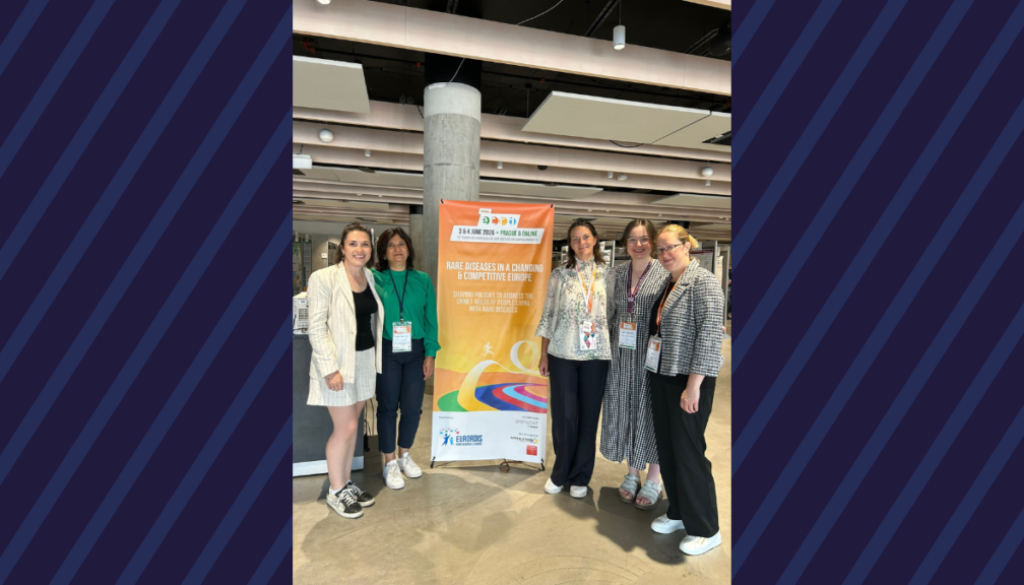
Earlier this month, I travelled to Prague with Lucy McKay and Sheela Upadhyaya to attend the 13th European Conference on Rare Diseases and Orphan Products (ECRD 2026) on behalf of Medics for Rare Disease.
At this biennial conference organised by EURORDIS, we joined hundreds of patients, advocates, clinicians, researchers, industry representatives and policymakers from across Europe to discuss the future of rare disease care.
This year’s conference theme, Rare Diseases in a Changing and Competitive Europe, reflected an important moment for the rare disease community. As discussions begin around a future European Blueprint for Rare Diseases and the UK Rare Diseases Framework approaches its conclusion, there was a strong focus on how policy, research and healthcare systems can better meet the needs of people living with rare conditions.
A Sense of Momentum Across Europe
One of the most encouraging aspects of the conference was the level of political engagement. The opening plenary featured ministers and policymakers from across Europe, reflecting growing recognition that rare diseases must be prioritised within healthcare systems.
There was particular excitement surrounding the development of the European Blueprint for Rare Diseases which is intended to help shape a future European Action Plan for Rare Diseases and support wider international efforts, including the World Health Organisation’s Global Action Plan on Rare Diseases which is in development.
As the UK Rare Diseases Framework nears its end, I was left wondering what comes next at home. The ambition and enthusiasm on display in Prague set a high bar and highlighted the importance of maintaining momentum for rare disease policy across the UK.
Sharing Medics for Rare Disease’s Work
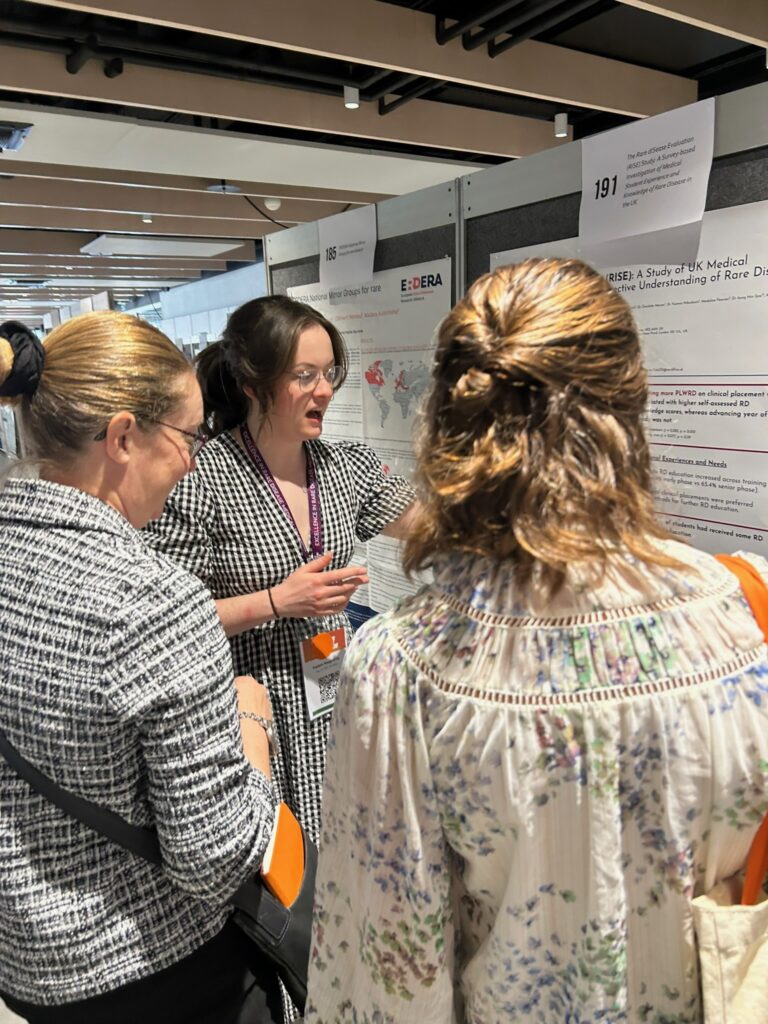
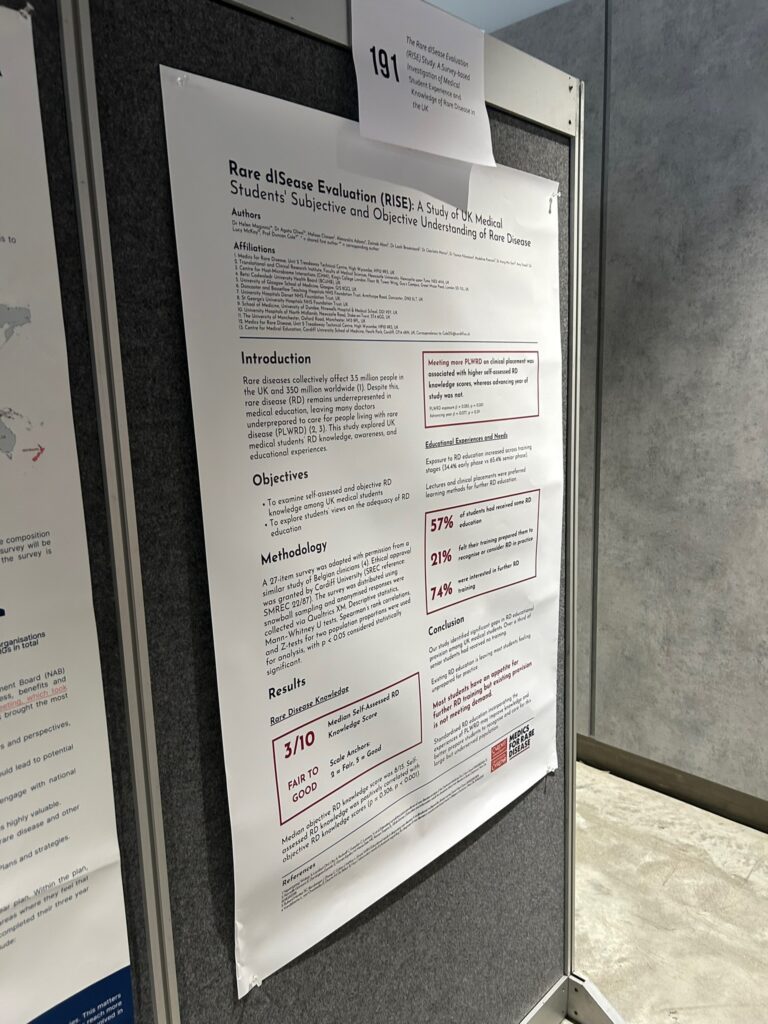
The conference also provided an opportunity to showcase Medics for Rare Disease’s work through our poster on the RISE study, which explores rare disease knowledge among UK medical students.
Conversations with delegates reinforced something we hear repeatedly in our own work: healthcare professionals want to support people living with rare disease, but many receive little or no formal training on the subject.
This lack of training is one of the reasons Medics for Rare Disease created Rare Disease 101, our free online training designed to help healthcare professionals become Rare Aware – leaving them able to provide more informed, person-centred care to people living with rare conditions.
Advances in diagnostics, treatments and policy can only achieve their full potential if healthcare professionals are equipped to recognise rare disease, navigate increasingly complex care pathways and support patients effectively throughout their journey.
Looking Beyond Diagnosis
Diagnosis remains one of the most important milestones in any rare disease journey, but a recurring theme throughout ECRD was that diagnosis should be viewed as a beginning rather than an end point.
Lucy took part in a panel discussion facilitated by Sheela as part of UCB’s symposium, Navigating the Many Paths of the Diagnostic Odyssey. A key message was that there is no single diagnostic odyssey. Some people face years of uncertainty before receiving a diagnosis, while others receive a diagnosis relatively quickly but continue to struggle to access appropriate care, treatment or support.
Over the past decade, much of the focus in rare disease policy has been on advancing diagnostic technologies. However, better tests alone will not solve the challenges people face and people living with rare disease need more than access to technology. They need healthcare professionals who are equipped to recognise when a rare condition may be present, navigate uncertainty, and guide them towards the right pathways for diagnosis and support.
As new technologies continue to emerge, it is essential that we keep the individual person at the centre of the agenda. Otherwise, we risk creating a situation where technology continues to advance while the experiences and outcomes of the people it is designed to help fail to improve at the same pace.
This message resonated strongly with many of the discussions taking place across the conference. Whether considering newborn screening, access to specialist services or emerging therapies, the ultimate goal is not simply achieving a diagnosis but improving quality of life.
The Importance of Holistic Care
The sessions I attended on holistic care were among the most thought-provoking of the conference.
People living with rare conditions often describe challenges that extend far beyond the direct medical consequences of their condition. Difficulties accessing coordinated care, managing education or employment, navigating social care systems and coping with uncertainty can all have profound effects on quality of life.
Speakers highlighted growing evidence that people living with rare disease consistently identify care coordination and psychosocial support as major unmet needs. Despite this, these aspects of care often receive far less attention than diagnosis and treatment.
There was also considerable discussion about how patient registries and existing datasets could be used more effectively to generate evidence relating to quality of life, psychosocial wellbeing and care experiences. As healthcare systems increasingly seek evidence-based approaches to service improvement, ensuring that these outcomes are measured and valued will be essential.
For healthcare professionals, these sessions served as an important reminder that improving rare disease care is not always about finding a cure. Sometimes it is about listening, coordinating care more effectively, providing practical support and recognising the wider impacts that rare disease can have on people’s lives.
Mental Health Cannot Be an Afterthought
Mental health emerged as one of the strongest themes of the conference.
A particular highlight was hearing provisional findings from the latest Rare Barometer survey, presented by Jessie Dubief from EURORDIS. The results highlighted significant gaps in mental health support for people living with rare disease and their families and prompted important discussions about what needs to change.
These themes were explored further during the session on mental health in rare conditions. Speakers discussed how mental health challenges are often misunderstood, under-researched and insufficiently integrated into care models. Mental health difficulties arise from the biological effects of some conditions, but also from diagnostic uncertainty, social isolation, financial pressures, caregiving responsibilities and fragmented healthcare systems. Mental health should not be viewed as a separate issue alongside rare disease care, but as an integral component of holistic, biopsychosocial care.
As awareness of mental health continues to grow within healthcare more broadly, there is an opportunity to ensure that the specific experiences of people living with rare disease are not overlooked. The conversations taking place at ECRD suggest that this issue is increasingly gaining the attention it deserves.
Learning from Others
Beyond the formal sessions, one of the most valuable aspects of ECRD was the opportunity to learn from others across the rare disease community.
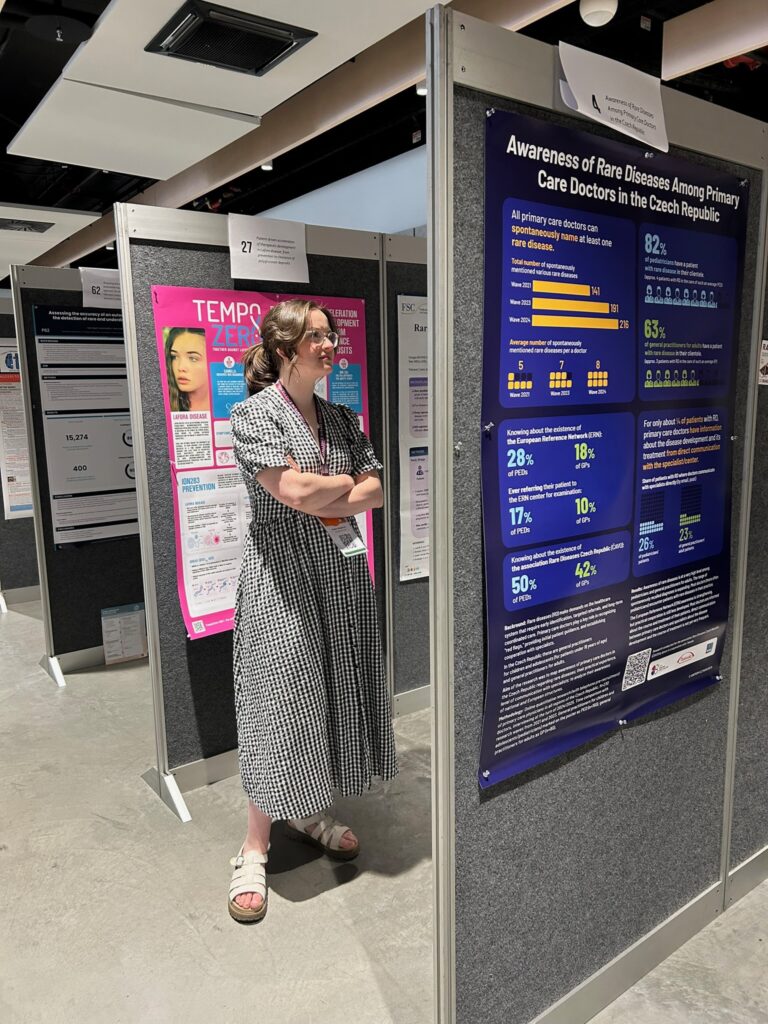
The poster sessions showcased an impressive range of research, innovation and advocacy initiatives. Among my personal highlights was meeting Romain Alderweireldt and learning about the GEMS project, which aims to identify protective modifier genes that may explain differences in cardiovascular outcomes in people living with Marfan syndrome.
Projects such as these demonstrate the creativity and ambition that continue to drive rare disease research. They also highlight the importance of collaboration between researchers, clinicians, patients and patient organisations in advancing our understanding of rare conditions.
Final Reflections
Leaving Prague, I felt encouraged by the level of ambition, collaboration and optimism across the European rare disease community.
Significant challenges remain. Mental health support remains inadequate for many people living with rare disease. Care coordination continues to be fragmented. Access to diagnosis, specialist care and treatments varies considerably between countries and healthcare systems.
Yet there was a clear sense of momentum throughout the conference. Policymakers, researchers, clinicians, patient advocates and industry representatives were all engaging with the same fundamental question: how can we ensure that progress in research, policy and innovation translates into meaningful improvements in the lives of people living with rare disease?
For me, one message stood out above all others. Improving outcomes for people living with rare disease requires us to look beyond diagnosis alone. Better care means understanding the whole person, addressing psychological and social needs alongside medical ones, and ensuring that every individual receives the support they need to live well with their condition.
Thank you to UCB, a Partner of Medics for Rare Disease, for initiating, organising and funding the Aspire4Rare project and its panel discussion at ECRD.